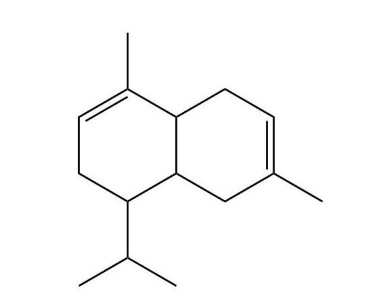
Sesquiterpenes
Sesquiterpenoids
C15
Also called sesquiterpenoids. They are widespread in nature, occur in a great many isomers and are widely studied as raw materials for fragrances and cosmetics.
Agarwood consists of essential-oil components such as benzylacetone, residual components such as hydrocinnamic acid, and the compounds that make up most of the resin: sesquiterpenes and 2-(2-phenylethyl)chromones.
When agarwood is burned, its smoke carries sesquiterpenes such as karanone, agarospirol, kusunol and dihydrokaranone. Research reports that as heat oxidizes and breaks them down, each turns into different aroma compounds, and their combination creates the deep, distinctive scent of agarwood (Ishihara et al., 1993).
| Compound class | Aroma impression |
|---|---|
| Ketones · aldehydes | Floral |
| Lactones | Sweet |
| Carboxylic acids | Sharp, pungent |
Source: "A Comparative Analysis of the Volatile Components of Agarwood from Vietnam and other Regions"
Compounds of 15 carbon atoms built from three isoprene units. Heavy and slow to evaporate, they form the backbone of the scent of agarwood resin.
Also called sesquiterpenoids. They are widespread in nature, occur in a great many isomers and are widely studied as raw materials for fragrances and cosmetics.
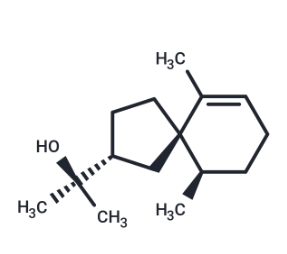
A representative sesquiterpene alcohol of agarwood, belonging to the vetispirane group. It is also detected in the smoke given off when agarwood is burned.
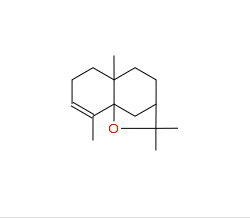
A compound with woody and nutty notes, found mainly in agarwood whose resin formed after fungal infection.
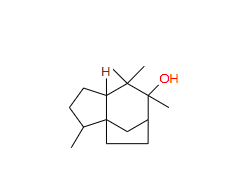
A sesquiterpene alcohol named after jinkō (沈香), the Japanese name for agarwood.
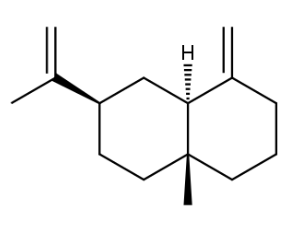
A sesquiterpene hydrocarbon found in the essential oils of many plants, including agarwood oil.
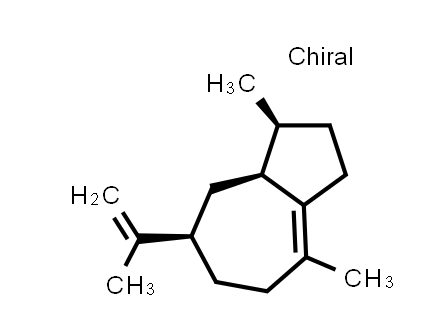
A terpene made of three linked isoprene units, widely used in the perfume and cosmetics industries.
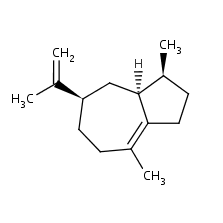
A sesquiterpene with a guaiane skeleton, with methyl groups at positions 3 and 8 of an octahydroazulene structure.
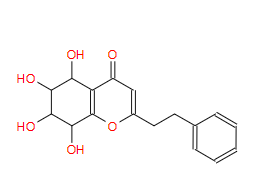
A compound of the 2-(2-phenylethyl)chromone group. It is characteristic of agarwood resin and is studied as a marker compound for assessing quality.
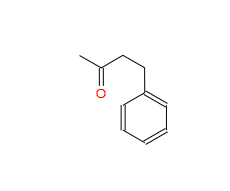
An essential-oil component of agarwood. With its sweet, floral scent, it is one of the main notes released when agarwood is warmed.
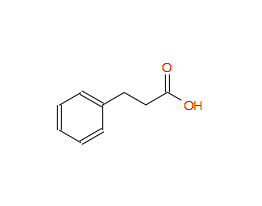
A component of the residual fraction of agarwood, detected together with related compounds such as p-methoxycinnamic acid.
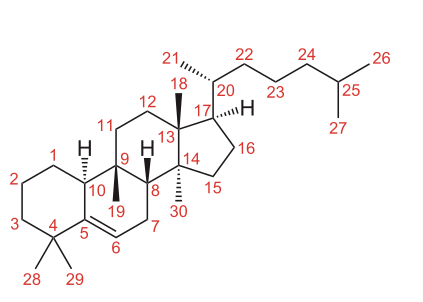
Bitter compounds also found in the unripe parts of gourd-family plants such as cucumbers and melons, and reported in agarwood as well. There are about 20 variants, named A through T.
· Other compounds detected in agarwood include α-santalol, cedrol, elemol, eudesmol, γ-selinene, valencene and dehydrofukinone (dihydrokaranone).
· The composition varies with origin, species, and the cause and duration of resin formation. This page introduces compound names and aroma characteristics only and does not describe any effect or benefit of products.
· Structural formulas: Korean Traditional Knowledge Portal, agarwood-related compounds